Local market context
Why the market needs a different sales path.
Next step
Want to know if your market is open?
The Builder Growth Assessment uses your reported stage and stated constraint to suggest a lane before qualified builders verify territory with us.
Start the Builder Growth AssessmentBuilt from inside the NZ builder market
New Zealand is not a market we are guessing at from overseas. Cam Upton has spent years inside the NZ and Australasian builder industry, including as admin of the NZ Builders Facebook community with more than 32,000 members and as former marketing lead at The Professional Builder.
That matters because builder marketing in New Zealand is not just a channel problem. The market is small, referral-heavy, and trust-led. Homeowners check your projects, your reviews, your process, and the way you follow up before they decide whether you are the serious option.
A generic digital agency can sell SEO, Google Ads, or social media as separate services. Contractor Scale installs the full lead-to-sale system around how NZ builders and renovators actually get chosen.
The problem with most NZ builder marketing
Most builders and renovators in New Zealand do not have one clean pipeline. They have referrals, a website, maybe a few ads, a Google Business Profile, some social posts, and a spreadsheet or inbox where enquiries quietly disappear.
That creates the familiar pattern: busy one quarter, quiet the next. Good leads arrive when nobody has time to call them. Homeowners ask for free quotes before they understand the process. The owner ends up carrying the marketing, follow-up, and sales load personally.
That is why the offer is not just 'more leads.' More leads into a weak response and sales process only creates more admin. The goal is a system that creates demand, responds fast, nurtures trust, and converts serious enquiries into the right next step.
The lead-to-sale system we install
The same system runs through every market, but the NZ version is tuned for local trust signals and local buying behaviour.
Demand means being visible for the searches and channels that matter: home builder marketing New Zealand, builder marketing Auckland, renovation builder searches, local SEO, Google Ads, Meta proof, and content that makes your process easier to understand.
Response means new enquiries do not sit cold in an inbox. AI first touch, human calling where it matters, lead routing, and clear qualification protect owner time and create a warmer handoff.
Nurture keeps future clients moving while they compare builders, talk to partners, sort finance, or wait for the right project window. Conversion gives the sales process, assets, and coaching needed to turn fit into paid next steps instead of endless free quoting.
Local work needs a specific offer and relevant proof
A homeowner comparing builders needs to see that you serve their area and understand the kind of project they want. A townhouse buyer and someone planning a custom home need different examples, different questions and a different next step.
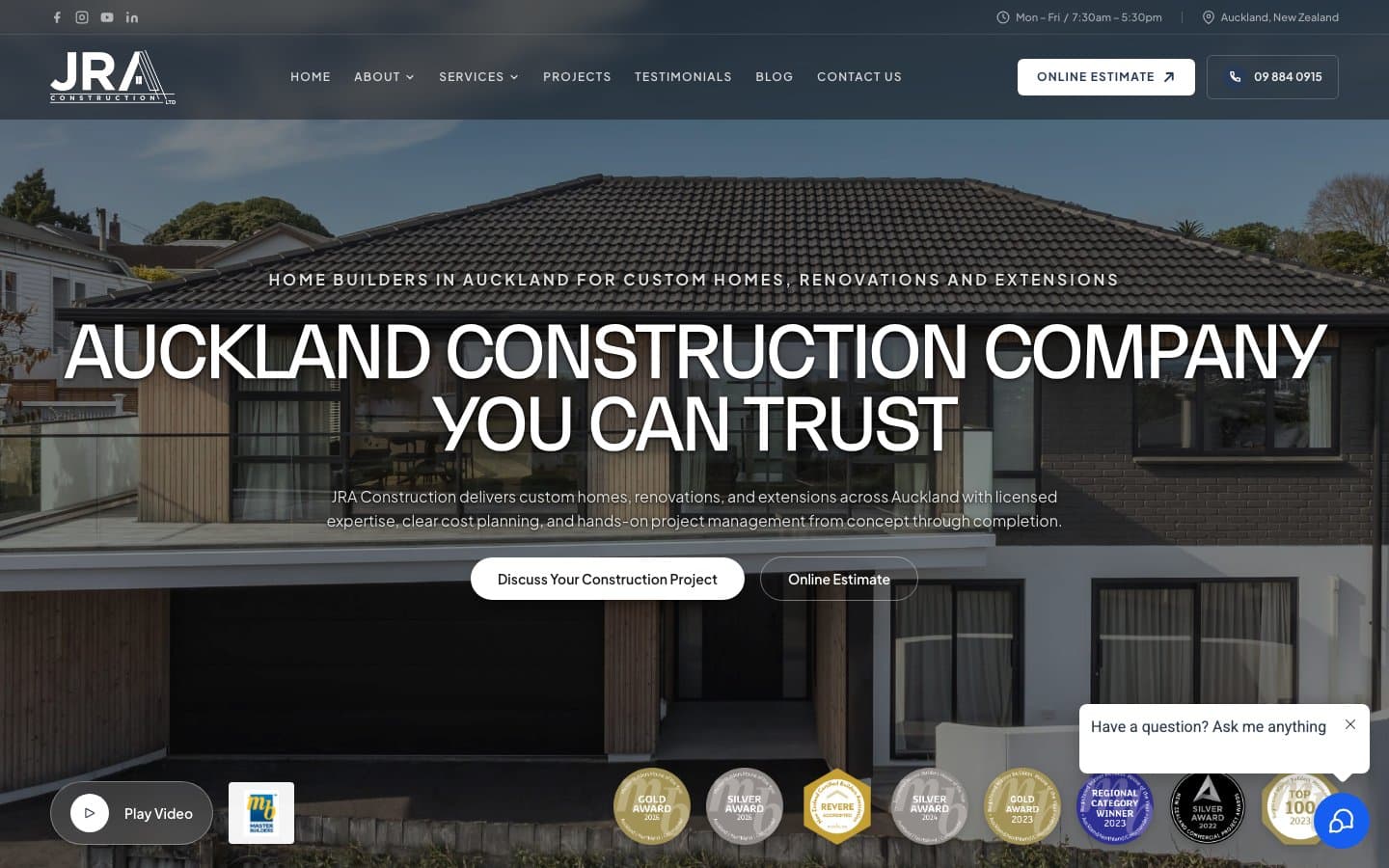
For JRA Construction in Auckland, the task was a townhouse sell-down. Four Meta lead campaigns produced 287 form leads against $4,424 in ad spend. The client later confirmed that all eight properties were under contract and asked us to pull the ads.
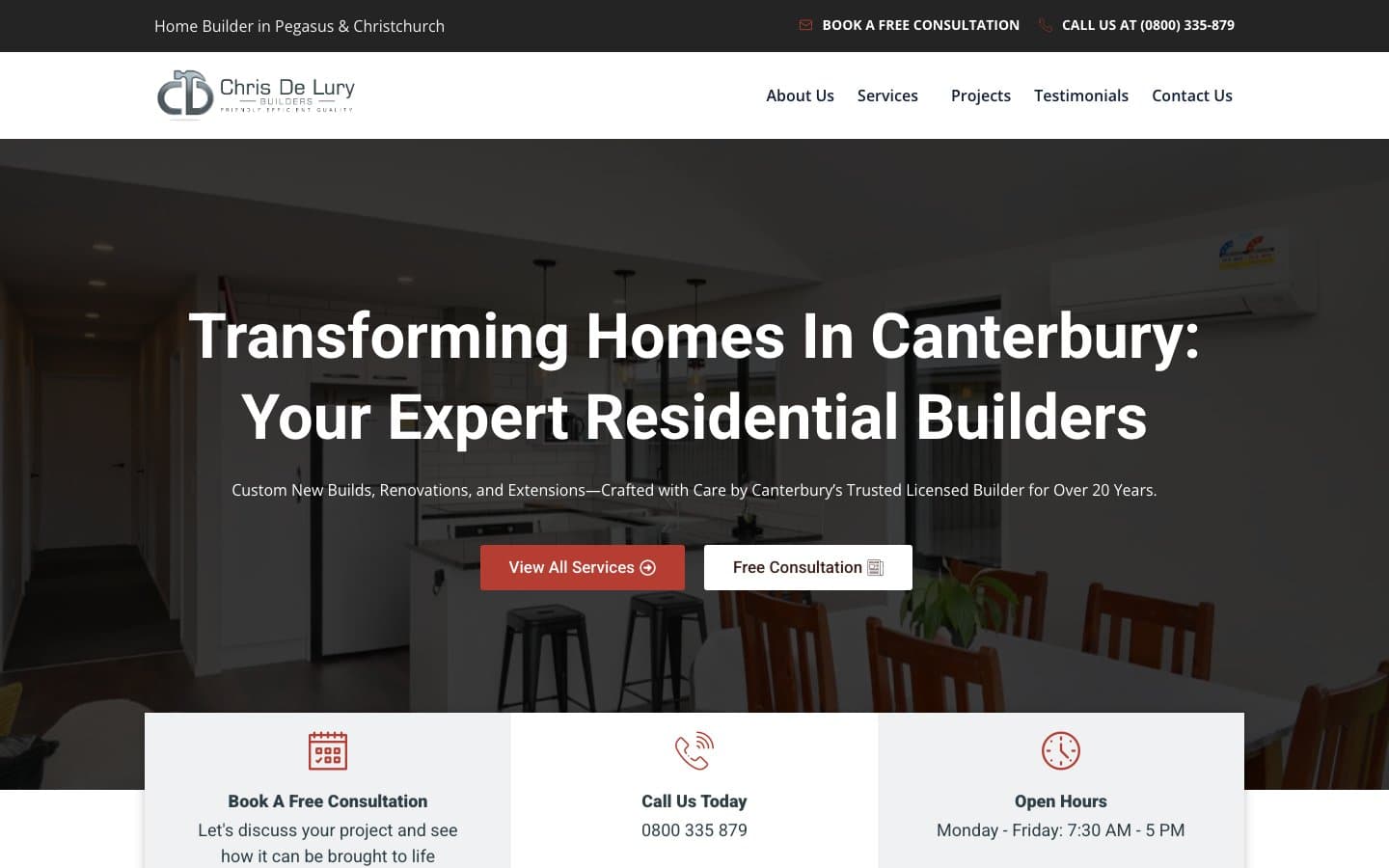
For Chris De Lury Builders in Christchurch, the path began with Google Ads and led to a signed custom build. The important connection was between the search, the offer, qualification and the first conversation. Those are two different projects with two different acquisition paths, both feeding a sales process rather than stopping at the enquiry.
What we install for NZ builders and renovators
The install can include SEO, Google Ads, Meta campaigns, content, website and landing-page improvements, CRM pipeline setup, lead response, nurture, sales assets, and reporting. The pieces depend on the bottleneck; the point is that they operate as one system.
If your issue is visibility, we build demand. If leads are arriving but not turning into booked calls, we fix response and qualification. If prospects need time, we install nurture. If the team is quoting too much unpaid work, we tighten the sales process and next-step offer.
That is the difference between hiring a channel vendor and installing a growth function. The channel matters. The handoff matters more.
The territory model in New Zealand
Contractor Scale works with one primary builder per territory in New Zealand. That means we do not stack direct competitors in the same market or dilute the strategy across businesses trying to win the same projects.
The Builder Growth Assessment routes your business stage, current constraint and preferred level of help. Qualified builders then use the Builder Growth Strategy to verify territory, economics and where the real leak sits: demand, response, nurture, conversion, or a mix of all four.
If the territory is taken or the fit is wrong, we will say so directly. If there is a fit, the next step is a practical plan for what has to change to create a steadier pipeline of better-fit work.