Local market context
Why the market needs a different sales path.
Next step
Want to know if your market is open?
The Builder Growth Assessment uses your reported stage and stated constraint to suggest a lane before qualified builders verify territory with us.
Start the Builder Growth AssessmentWhy Australian builder marketing needs a full system
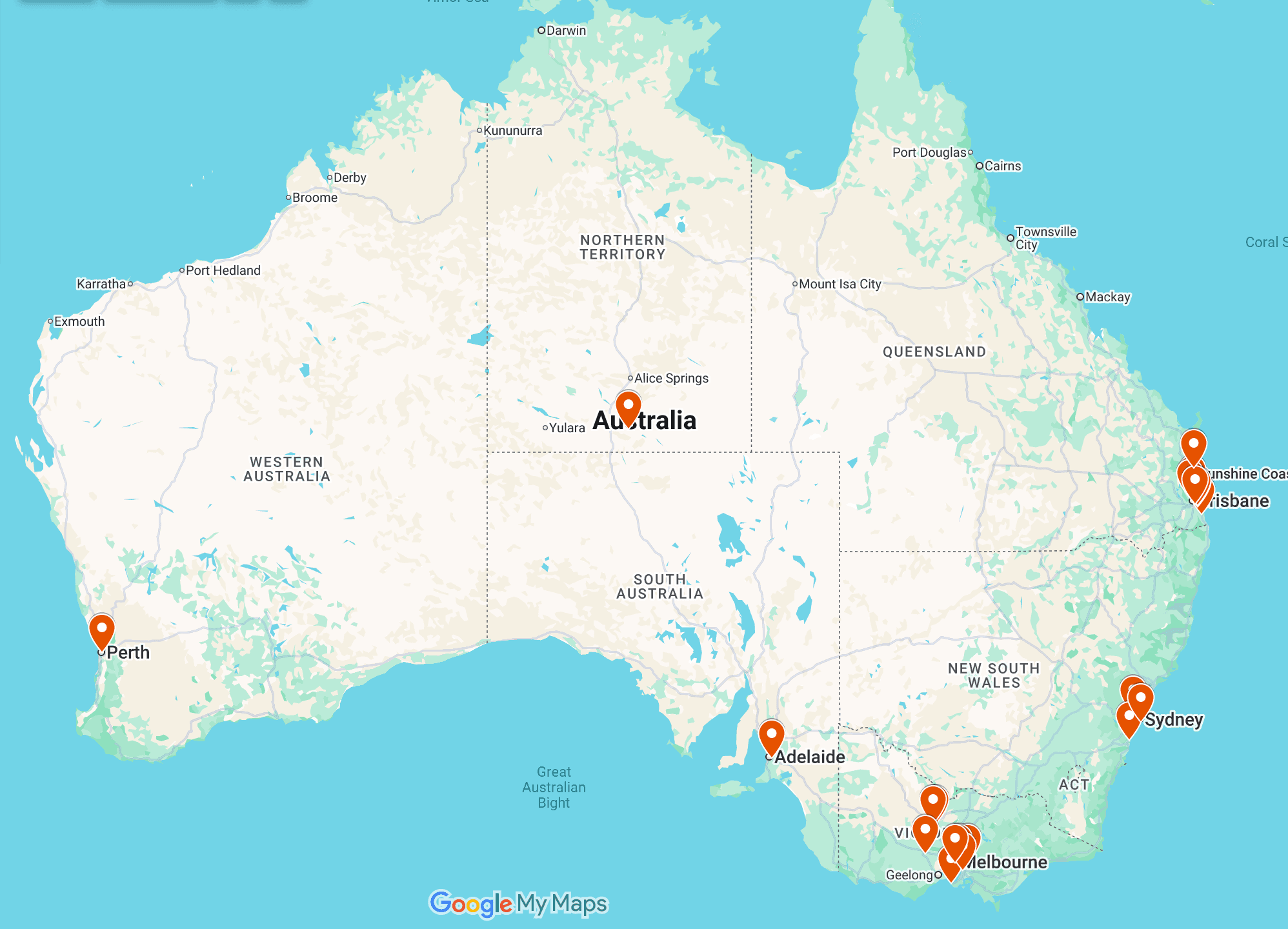
Australia's residential construction market is fragmented and competitive. Sydney, Melbourne, Brisbane, Perth, Adelaide, and the Gold Coast each behave like different markets: different price points, different buyer expectations, different search patterns, and different levels of agency competition.
The common failure mode is still the same. Builders buy separate pieces: a campaign, a website, a CRM, a few social posts. The pieces might be fine, but the handoffs are weak. Leads arrive without context. Follow-up is slow. Nurture is inconsistent. Sales conversations turn into unpaid quoting.
That is why the system matters. Australian builders and renovators do not need more disconnected marketing activity. They need demand, response, nurture, and conversion connected end to end.
How Australian homeowners research builders and renovators
Australian homeowners research by city, project type, and trust signal. Searches like custom home builder Sydney, renovation specialist Melbourne, design-build Brisbane, home builder Perth, and builder marketing Australia all point to the same behaviour: people want specific proof before they call.
For high-value builds and major renovations, the buyer journey is not a single click. It is a long comparison cycle across Google, reviews, project galleries, referrals, social proof, and follow-up. Your marketing has to survive that whole cycle.
That means local SEO, Google Business Profile quality, educational content, Meta proof, and paid search all need to feed a single pipeline. If they are treated as separate campaigns, the buyer feels the gaps.
Sydney, Melbourne, Brisbane, Perth, Gold Coast, and Adelaide
The Australia page should carry national commercial intent first, then support major city and state modifiers without creating thin city pages too early.
Sydney and Melbourne are more competitive and need stronger proof, deeper content, and cleaner local authority. Brisbane, Perth, the Gold Coast, and Adelaide often leave room for builders and renovators who can explain their process clearly and show up consistently across search and social.
City-level pages can come later when there is enough search demand, proof, and unique context. For now, the country page should be the strongest Australian commercial landing page and link naturally into system, SEO, Google Ads, and lead-generation content.
What we install for Australian builders and renovators
The install can include SEO, Google Ads, Meta campaigns, content, website and landing-page improvements, CRM pipeline setup, lead response, nurture, sales assets, and reporting.
Demand creates the enquiry. Response makes sure it is contacted and qualified. Nurture keeps the relationship alive through a long research cycle. Conversion turns the right opportunities into paid next steps and signed projects.
The goal is not to make you busier with low-quality leads. The goal is to build an owned pipeline that gives your team better conversations, clearer handoffs, and more control over the projects you choose to chase.
Territory model in Australia
Contractor Scale works with one primary builder per territory in Australia. We do not stack direct competitors in the same market or run the same positioning for multiple firms chasing the same projects.
Australia is one of our strongest markets outside New Zealand, but availability changes by city and fit. Some markets are open. Some need a waitlist. Some are not the right economics for the full system yet.
The Builder Growth Assessment is the two-minute starting point. Qualified builders then use the Builder Growth Strategy to verify market, capacity and whether the system makes commercial sense.