
It looks fine and says nothing
Hero photo, three adjectives, a gallery. No process, no price range, no proof of the kind of work you want more of. A serious homeowner leaves to find a builder who explains how it works.
Home builder website design
Most builder websites are a brochure with a contact form. Ours is the front door of the Contractor Scale Growth System: it qualifies the enquiry, captures it and hands it to a human the same day. The page is the start of the process, not the whole of it.
Hero photo, three adjectives, a gallery. No process, no price range, no proof of the kind of work you want more of. A serious homeowner leaves to find a builder who explains how it works.
An enquiry lands in an inbox nobody checks until Friday. By then the homeowner has spoken to two other builders. Response speed decides more jobs than design does.
Calls, forms and ads live in different places, so nobody knows which page produced the consult, the paid preliminary or the signed contract. Decisions get made on feel.
Those three leaks are why a new design on its own rarely changes the numbers. The fix is a site built as the front end of a system, with the follow-up and the reporting already connected.
What is underneath the page
Demand, response, nurture, conversion. The site has a job in each. When it is built in isolation it does the first job badly and the other three not at all.
Service and area pages written for the searches homeowners actually type, plus the campaign landing page for paid traffic. One page, one job.
A short form that asks the qualifying questions, then a human call the same business day. The site exists to start that conversation, not to replace it.
Cost guides, process pages and project stories that answer the five questions every homeowner asks: cost, process, timeline, comparisons, problems.
The paid planning or preliminary step is on the page as the obvious next move, so the expert call starts from the right expectation.
What is on the site
A homeowner spending real money wants to know what you build, how you work, what it costs and whether other people like them were happy. The site answers those in that order, on every service page.
Custom homes, renovations, extensions, each with its own title, heading and proof. Area pages only where you have done work, so they rank and stay ranked.
Google rating and count on the page, named testimonials, project pages with scope, timeframe and a cost band, licence and guarantee where the reader needs reassurance.
How you work from first call to handover, what moves the number, and why a paid preliminary comes before a quote. The site pre-sells the conversation.
Every form and call lands in one pipeline, graded, and called back the same day. You see which page produced the consult, the prelim and the contract.
Home builder website examples
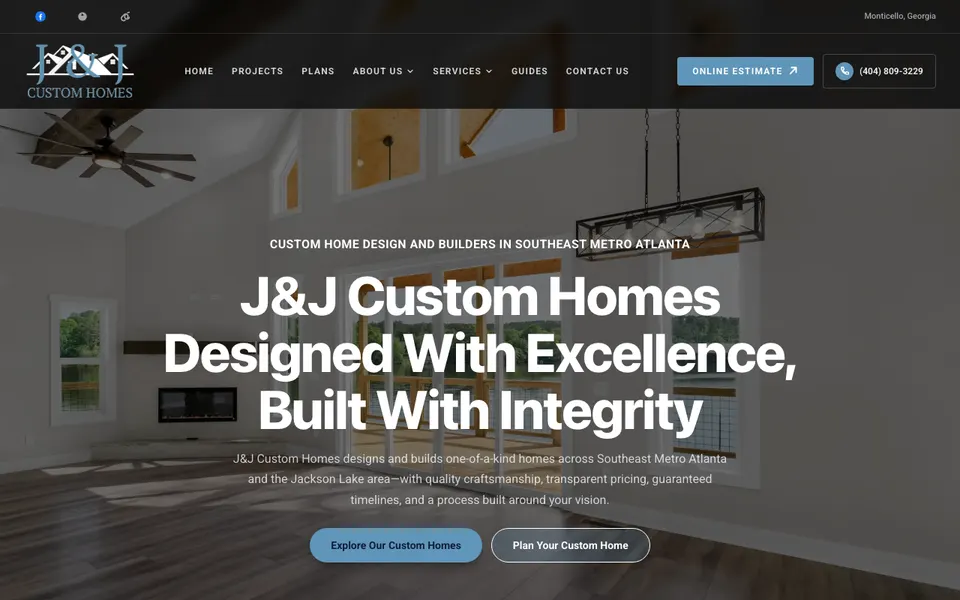
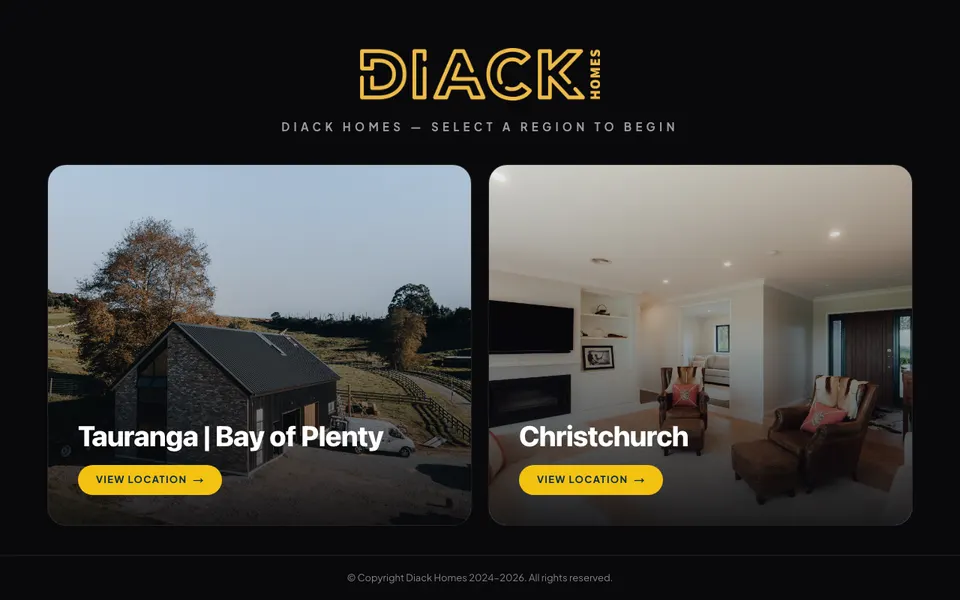
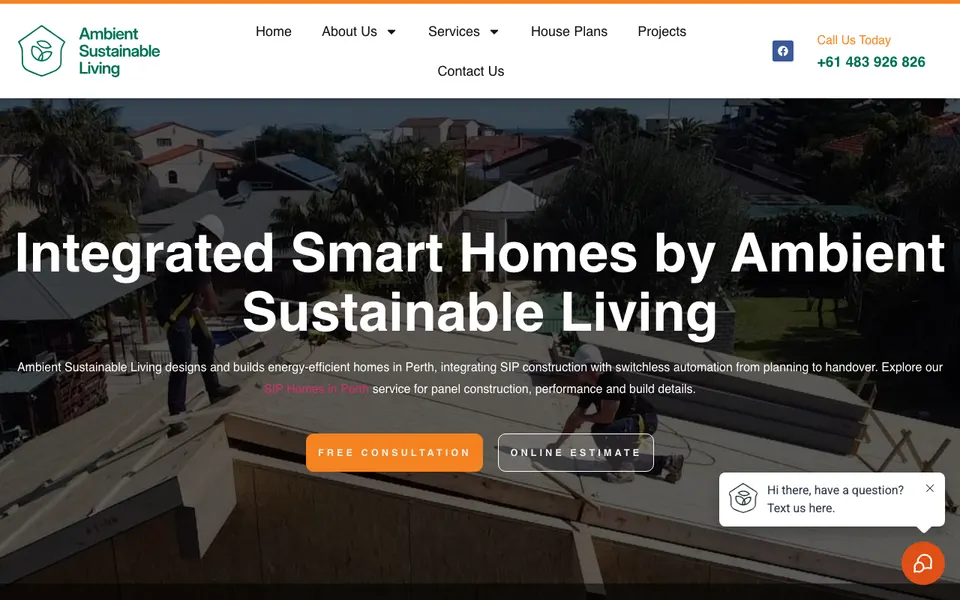
A custom home builder in Georgia, a Passive House specialist in Sydney, a renovation crew in Auckland, a net-zero builder in British Columbia. Different trades and markets, the same bones: phone and one clear action in the header, a page per service, real project pages, process and guarantee where the nerves are, and an enquiry path that qualifies before anyone drives out. The numbers on each card point to the item on the 21-point checklist.
 Visit live site
United States
Custom home builder, Monticello, Georgia
 Visit live site
New Zealand
Renovation and extension builder, Franklin, Auckland
 Visit live site
New Zealand
New builds, renovations and commercial fit-outs, Blenheim, Marlborough
 Visit live site
Australia
Home builder, extensions and commercial, Eastern suburbs, Melbourne
 Visit live site
Canada
Net-zero custom home builder, Chilliwack, Fraser Valley, BC
 Visit live site
New Zealand
Home builder in two regions, Tauranga and Christchurch
 Visit live site
Australia
Integrated smart home builder, Perth
 Visit live site
Australia
Certified Passive House builder, Sydney
Live client sites, captured 7 October 2026. Each one sits inside that builder's own pipeline and reporting; the case studies carry the results where we can publish them.
Proof
Ambient — Sustainable Living
We created the logo, brand guidelines and website, then connected paid marketing with enquiry capture and a staged sales pipeline. The work gave buyers a way to understand Ambient’s approach and gave the team a place to manage the next conversation.
Marlborough Building Services
Built a clean, professional site matched to what Sam does and structured to convert — not just exist. Got the front door working before adding traffic.
J & J Custom Homes
Packaged the prelim as the obvious next step, aligned scripts and handoffs between marketing and sales, and put speed on response so hot enquiries met a human before they cooled.
Individual client results in context, not a forecast for your business.
How it is delivered
Five short questions. We look at your current site, your pipeline and your constraint before recommending anything. Sometimes the site is fine and the follow-up is the problem.
You get a written page-by-page plan: every service and area page, its keyword, its title and heading, the proof it needs, and the technical fixes. It is the build brief and the SEO plan in one document.
A managed plan includes a campaign landing page or agreed website improvements. A full rebuild is scoped and itemised before you sign, with its payment and delivery terms confirmed in your proposal.
Scope, currency, tax and anything separately chargeable are stated in your proposal before you commit. See plans and pricing.
Free self-check
Twenty-one things a home builder website needs, from the phone number in the header to who calls the enquiry back. Tick what you have and get a score. Takes four minutes.
Read first
Proof architecture, offer design and qualification built in from the start. If you are briefing your own designer, this is the brief.
See how the website fits our builder marketing system in Australia and New Zealand.
Q&A
Engineered for builders, not designed for applause. If the answers fit, start the assessment.
No. A website on its own does not win projects; the system around it does. The site is built as part of a Growth or Scale plan, where it feeds the caller, the follow-up and the reporting. If you only want a site right now, use the 21-point checklist and the website conversion playbook to brief whoever builds it.
Growth and Scale include a campaign landing page or agreed website improvements. A full rebuild, design assets or bespoke development are separately scoped and itemised, with payment and handover terms confirmed before you commit.
Your agreement confirms domain and account access, website ownership, payment and handover. A major rebuild can have different payment and ownership terms from campaign improvements; we explain those before commitment.
A modern, fast framework deployed to your own domain, with structured data for your business, services and FAQs built in. No page-builder lock-in and no plugin stack to keep patched. The build detail is in your proposal, not in the sales pitch.
The build includes the local SEO structure: one page per service, area pages where you have done work, titles and headings written for the search, Google Business Profile linked and matching. Ongoing SEO, project-led content and review generation are part of Scale.
Then we improve it rather than rebuild it. The assessment and strategy session decide that. Use the checklist to identify what needs checking, then review the actual enquiry path and follow-up. A high score alone does not establish where enquiries are being lost.
New Zealand, Australia, the United States and Canada. Established custom-home builders, substantial renovators and design-and-build companies. Civil contractors and one-person trades are not a fit.