
Why Your Construction Business Needs a Professional Website

Your website helps a homeowner check your work before they enquire. Clear project evidence, service information and contact details give them something useful to judge.
A referral may introduce your business, but the homeowner can still visit your website before calling. Make it easy to see what you build, where you work and what happens next.
Costs and Pricing Considerations
“How much should I spend on a construction website?”
Set the website budget against the work you need delivered. Ask for an itemised scope covering design, copy, project photography, enquiry forms and launch support. Confirm which assets you supply and which the provider creates.
Check ongoing costs separately: hosting, security, backups, updates and any support. Agree who owns the domain, content and accounts, and how changes will be charged. A low build price can leave important work outside the scope.
Measure the commercial result after launch. Connect website enquiries to suitable conversations, signed projects and the margin those projects contribute. Website visits or enquiry totals alone do not establish a return on the investment.
Common Website Problems and Solutions
Start by checking four practical problems that can make it harder for a homeowner to enquire:
Poor Navigation
- Main issue: Visitors can’t find basic information quickly
- Client impact: Frustration leads to website abandonment
- Solution: Create clear, logical website structures that prioritise key information about services, projects and contact details
Slow Loading Speeds
- Main issue: Important content or enquiry controls are slow to become usable
- Client impact: Waiting makes it harder to view projects or complete an enquiry
- Solution: Professional optimisation through:
- Image compression
- Clean code implementation
- Strategic content delivery
- Proper hosting selection
Missing Essential Information
- Main issue: Lack of trust-building elements
- Required elements:
- Licences and certifications
- Completed project galleries
- Client testimonials
- Clear contact details
- Solution: Organised presentation of credentials and experience in an easily accessible format
Poor Mobile Experience
- Main issue: Websites don’t work well on phones/tablets
- Check: Use your own analytics to see which devices visitors use
- Impact: Potential clients struggle to:
- Read content
- View project photos
- Complete contact forms
- Access key information
- Solution: Test readable content, project images and enquiry forms on representative phones and tablets
Each of these problems can significantly impact your construction business’s ability to attract and convert potential clients. Professional website development addresses these issues systematically, creating a strong foundation for your online presence.
Professional Website vs DIY Solutions
A DIY platform can work if you have the time and skills to maintain it. Compare the finished result and ongoing ownership, rather than assuming a paid build or a particular platform will perform better.
If you hire a developer, show them the actual journey: homeowner reviews relevant projects, understands the service, enquires, and receives a reply. Specify the galleries, service pages and enquiry handoff needed to support that journey.
Ask the developer to explain how they will handle project proof, service coverage and enquiry capture. Review their relevant work and test the proposed process. A polished design alone does not prove that enquiries will reach the right person.
Compare ongoing effort as well as the build quote. Who adds projects, updates services, checks forms and fixes problems? Choose an arrangement your team can maintain as the business changes.
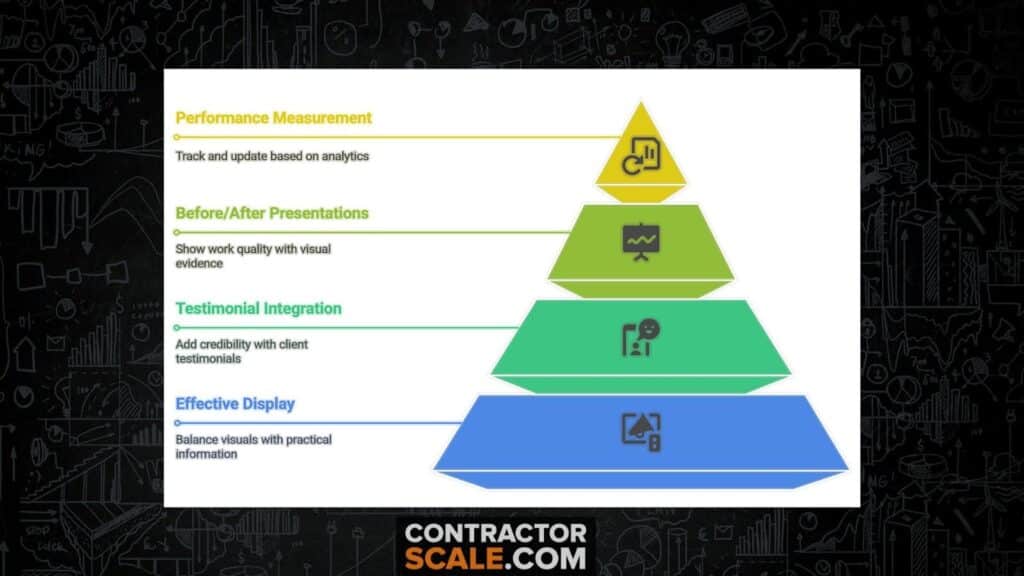
Project Showcase Impact
Your project portfolio helps a homeowner assess whether your experience matches their plans. Show relevant work with enough context to explain the scope, your role and what was delivered.
Effective Portfolio Display Methods
A portfolio must balance useful images with practical information. Group projects by the work you actually undertake. Explain the initial brief, the delivered scope and any important constraints, with permission to publish the details.
Client Testimonial Integration
Pair a genuine testimonial with its project where permission allows. Keep the client’s wording and explain the context. Publish completion times, cost outcomes or other results only when the project record supports them.
Before/After Project Presentations
Before and after presentations can help a homeowner understand what changed. Use comparable views and explain the work involved. Progress photos can show decisions and challenges that a finished image leaves out.
Measuring Showcase Performance
Track which projects people view and which enquiries mention them. Use that evidence to improve descriptions and navigation. Keep useful examples of your accepted work visible, rather than removing a project solely because it receives fewer views.
Essential Website Features
Prioritise the features that help a homeowner understand your work and make contact. Check each feature against the actual enquiry journey before adding more.
Core Service Presentations
Clear service descriptions form the foundation of every successful construction website. These descriptions avoid technical jargon and focus instead on client benefits and outcomes. Top construction websites organise their services by sector, making it easy for potential clients to find relevant information quickly.
Contact Accessibility
Make contact details easy to find. Use the options your team can reliably monitor:
- A monitored phone number with clear business hours
- Professional email addresses
- A clear enquiry path from relevant service and project pages
- Live chat options where appropriate
- After-hours information where relevant to the service
- Accurate service areas and any genuine public office details
Trust Building Elements
Display current credentials that apply to your business and the work shown:
- Industry licences and permits
- Professional Affiliations
- Safety records and certificates
- Awards and recognition
- Membership in professional organisations
- Insurance and warranty information
Technical Performance Requirements
The technical aspects of your website require equal attention:
- Usable loading performance on representative devices and connections
- Mobile-first responsive design
- Secure SSL connections
- Regular security updates
- Backup systems
- Analytics integration
User-Friendly Navigation
Navigation simplicity sets successful construction websites apart through:
- Intuitive menu structures
- Clear pathways to important information
- Logical content organisation
- Search functionality
- Breadcrumb navigation
- Easy return-to-home options
These features support a clear enquiry journey when they work together. Verify that the form reaches your team and that someone owns the reply. Their presence alone does not prove more leads or better conversion.
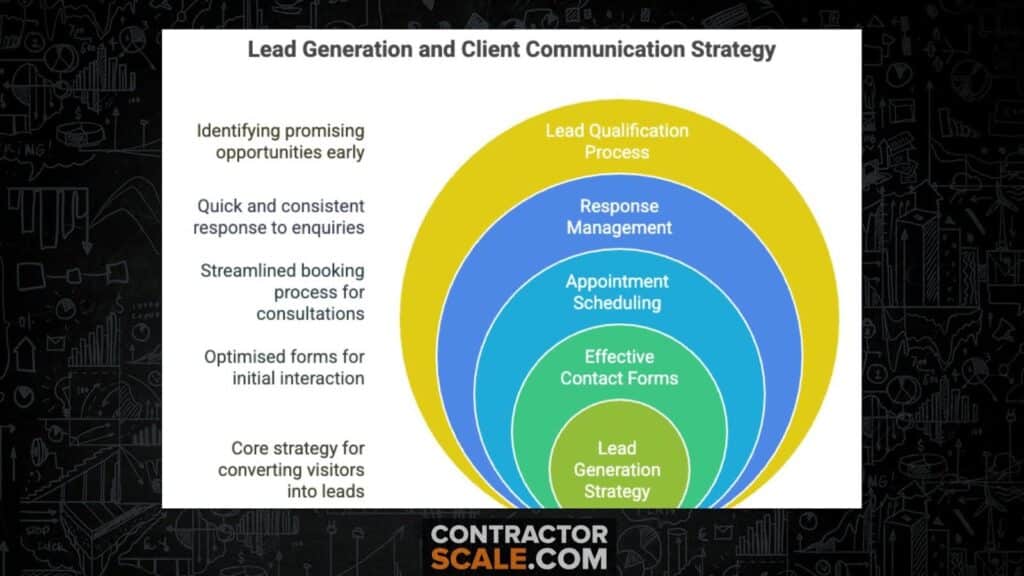
Lead Generation and Client Communication
Converting website visitors into qualified leads requires strategic planning and implementation. Construction websites that excel at lead generation focus on creating multiple touchpoints for potential clients while maintaining a professional and approachable presence throughout the conversion process.
Effective Contact Forms
Your contact form may be the homeowner’s first direct interaction with the business. Ask for enough information to route the enquiry and explain the next step. Test the form on mobile and verify the saved enquiry. Useful checks include:
- Strategic placement throughout the website
- Simple, uncluttered design
- Essential fields only (name, contact info, project type)
- Clear call-to-action buttons
- Mobile-friendly layout
- Automatic confirmation messages
Appointment Scheduling
The ability to schedule consultations directly through your website saves time for both your team and potential clients. Modern construction websites need streamlined consultation booking by including:
- Online calendar integration
- Automatic time zone adjustment
- Instant confirmation emails
- Reminder systems
- Rescheduling options
- Pre-appointment questionnaires
Response Management
A clear response process helps your team act while the enquiry is still relevant. Name the first responder and backup, set a realistic response expectation, and record the next action. Support that process with:
- Automated immediate acknowledgements
- Personal follow-up within one business day
- Clear response time expectations
- Holiday and after-hours protocols
- Emergency contact procedures
Lead Qualification Process
Clarify the project type, location and required work before deciding fit. An unknown budget, missing plans or early timeline needs a conversation, not an automatic rejection. Useful enquiry fields include:
- Budget range selectors
- Project type indicators
- Timeline preferences
- Location verification
- Service area confirmation
- Project scope assessment
Communication Channels
Different clients prefer different ways of communicating. Modern construction businesses must accommodate various communication styles while maintaining professional standards across all channels. Successful construction websites offer various contact methods such as:
- Traditional phone calls
- Email communication
- Text messaging options
- Live chat during business hours
- Contact preference selection
- Follow-up scheduling
Professional lead generation systems transform your website from a simple online brochure into a powerful sales tool. By thoughtfully implementing these elements, construction companies create efficient pathways for potential clients to engage with their services. The key lies in balancing automation with a personal touch, ensuring that every lead receives prompt, professional attention while maintaining the human element essential in construction projects.
Search Engine Visibility and Local Projects
Local visibility helps homeowners find builders serving their area. Keep the website and any eligible Google Business Profile accurate. Google’s local ranking guidance explains that local results depend on relevance, distance and prominence; this is separate from the ranking of an ordinary website page.
Add genuine projects and keep service information current so people can assess your experience. Request reviews from actual clients and respond helpfully. A posting schedule or review count does not guarantee a particular position.
Test the local enquiry path on a phone: readable project detail, working phone links and a usable form. Use your own traffic and enquiry data to prioritise problems.
Keep business details accurate across relevant directories and genuine trade or chamber profiles. Use listings where your business is eligible and the audience is relevant.
Trust Building Through Content
Your website content directly influences how potential clients perceive your construction business. Quality content builds trust and establishes your expertise before clients make contact.
Educational Resources: Key Content Types to Create
Construction clients often feel overwhelmed by the building process. Providing comprehensive educational resources helps them understand what to expect and demonstrates your expertise.
Required educational content includes:
- Step-by-step construction guides
- Project planning tips
- Budget consideration articles
- Material selection advice
- Timeline expectations
- Safety information
Common Questions: Essential Topics to Cover
Every construction project generates countless questions from clients. By proactively addressing these queries on your website, you reduce uncertainty and build confidence.
Your website should answer questions about:
- Project cost breakdowns
- Construction timelines
- Building processes
- Material options
- Safety measures
- Quality guarantees
Professional Credentials: Required Trust Signals
Credentials verify your capability to handle construction projects professionally and safely. Displaying these prominently on your website establishes immediate credibility.
Essential credentials to display:
- Industry certifications
- Building permits
- Safety records
- Insurance details
- Staff qualifications
- Professional memberships
Local Authority: Proof Points to Demonstrate
Local expertise matters significantly in construction. Demonstrating deep knowledge of your market area, including specific building requirements and community considerations, helps potential clients trust your capability to handle their projects.
Demonstrate local expertise through:
- Local project examples
- Area-specific knowledge
- Building code familiarity
- Council relationships
- Community involvement
- Industry partnerships
Building trust through content transforms your website from a simple business card into a valuable resource for potential clients. When you provide clear, honest information about construction processes, costs and requirements, you help clients make confident decisions while positioning your company as an industry authority.
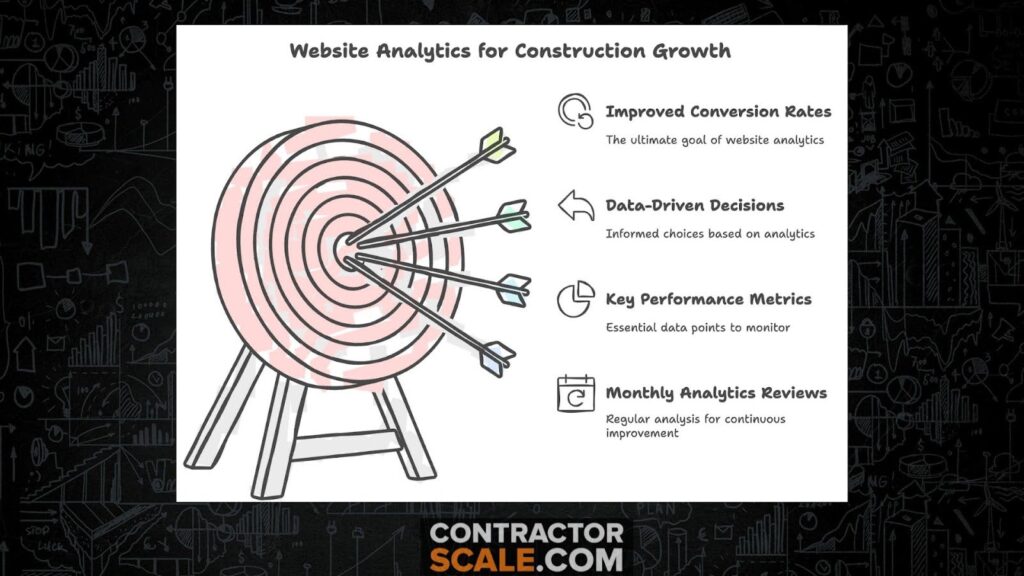
Website Analytics and Growth
Understanding your website’s performance through analytics provides crucial insights for growth. Construction companies that regularly monitor their website metrics make better decisions about content, design and marketing strategies. Analytics reveal not just how many people visit your website but how they interact with your content and what leads them to make contact.
Key performance metrics to track include:
- Visitor numbers and traffic sources
- Page views per session
- Time spent on site
- Bounce rates
- Mobile vs desktop usage
- Form completion rates
- Click-through rates on key pages
Conversion tracking helps connect a page to a saved enquiry and the later sales outcome. Check the enquiry record as well as the browser event. A button click or time spent on a page does not prove a qualified lead.
Monthly analytics reviews should focus on:
- Most visited project galleries
- Popular service pages
- Lead generation performance
- Mobile user behaviour
- Search term effectiveness
- Page load speeds
- Contact form analytics
Use each review to choose a concrete improvement, then compare the result over a suitable period. Keep source, project fit and signed-work outcomes separate from traffic totals.
Conclusion
A useful website gives homeowners evidence and a clear next step. Check the project pages, service information and enquiry handoff before committing to a rebuild.
At Contractor Scale, our website design for home builders work connects project proof, a clear offer and reliable enquiry capture. If you are improving an existing site first, the website conversion walkthrough helps you check those parts before deciding on a rebuild.
What sets us apart:
- Construction-specific expertise
- Proven lead generation systems
- Results-focused approach
- Transparent reporting
- A defined scope and agreed measures
- Agreed support and delivery responsibilities
Our work connects the website with enquiry response and sales follow-up. Start with the part of the journey that is failing, then agree the scope and measures for improving it.
If you need help deciding what to fix first, contact our team. We can review the enquiry path and discuss the appropriate scope.